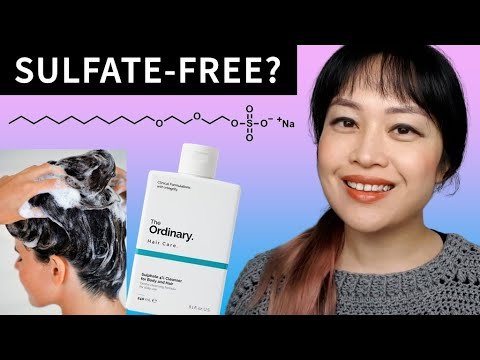
The Science of Shampoo and Conditioner sponsored by The Ordinary presents the chemistry behind shampoos and conditioners, clarifying what surfactants, sulfates and conditioning agents actually do for hair. Let us summarize key segments from the Lab Muffin Beauty Science video, including SLS vs SLES, colour fade considerations, and ingredient breakdowns for both cleansers and conditioners.
Let us also note the hands-on review of The Ordinary’s Sulphate 4% Cleanser and Behentrimonium Chloride 2% Conditioner, which evaluates cleansing strength, compatibility with colour-treated hair, and typical trade-offs. The aim is to equip viewers with mechanistic explanations, myth-busting insights from a chemistry PhD, and practical recommendations for choosing haircare products.
The Science of Shampoo
We approach shampoo as a formulated tool designed to restore a clean, manageable hair and scalp state while minimizing damage. In this section we outline the fundamental science that governs how shampoos work, how they interact with hair structure, the physical chemistry of water-based cleansing, and how different shampoo types—cleansing, clarifying and medicated—are distinguished by ingredients and intended outcomes.
Fundamental purpose: removing sebum, dirt and product residue from hair and scalp
We understand that the primary objective of shampoo is removal: sebum produced by sebaceous glands, inorganic and organic dirt deposited from the environment, and residues left by styling products. Sebum is a lipid-rich, viscous mixture that adheres to hair shafts and the scalp; dirt and product residues vary from particulate matter to hydrophobic oils and polymers. Effective shampoos break the interactions between these deposits and the hair surface so they can be rinsed away in water.
How shampoos interact with hair structure: cuticle, cortex and surface oils
We consider hair as a hierarchical structure with an outer cuticle layer of overlapping cells, an inner cortex that gives mechanical strength, and surface oils that coat the cuticle. Shampoos interact primarily with the cuticle and the oils on top of it. Surfactants remove surface oils and loosening deposits may temporarily lift or alter the cuticle scale edges, affecting shine and friction. Excessive stripping of oils or harsh mechanical action can roughen the cuticle and make hair more prone to tangling and breakage, while gentle cleansing leaves the cuticle smooth and the cortex intact.
Role of water and emulsification in cleansing
We rely on water as the continuous phase in which surfactants operate. Surfactants orient at interfaces and reduce surface tension, enabling the formation of micelles and emulsions that encapsulate hydrophobic oils and particulates. Emulsification converts oil into small droplets stabilized by surfactant molecules so they remain suspended in water and can be rinsed away. Temperature, water hardness, surfactant concentration and agitation all influence emulsion formation and rinsing efficiency.
Distinction between cleansing, clarifying and medicated shampoos
We differentiate shampoo types by function and formulation. Everyday cleansing shampoos are balanced for routine removal of sebum and light product residues while preserving moisture and softness. Clarifying shampoos are more concentrated or contain stronger detergents, chelators, or acids to remove heavy buildup from styling products, mineral deposits and silicones; they are intended for occasional use. Medicated shampoos contain active pharmacological ingredients—antifungals, antiseborrheics, keratolytics—targeting scalp conditions such as dandruff, seborrheic dermatitis or psoriasis, and are formulated for therapeutic benefit rather than cosmetic conditioning.
Surfactants Explained
We examine surfactants as the active molecules that enable cleansing, explaining their molecular structure, micelle formation, the major classes and how choice affects foaming, strength and mildness.
Molecular structure: hydrophilic head and hydrophobic tail
We describe surfactants as amphiphilic molecules with a water-attracting hydrophilic head and an oil-attracting hydrophobic tail. This dual affinity enables them to position at interfaces, reduce interfacial tension and stabilize dispersed oil or dirt in water. Molecular variations in headgroup chemistry, tail length and branching alter solubility, detergency and interactions with biological surfaces like hair and skin.
How surfactants form micelles and solubilize oils
We explain that above a critical micelle concentration (CMC) surfactants self-assemble into micelles—aggregates with hydrophobic tails inward and hydrophilic heads outward—creating an internal environment that solubilizes hydrophobic molecules. Oils and lipophilic residues partition into micelle cores and become dispersible in the aqueous phase, allowing them to be rinsed away. Micelle size, shape and solubilization capacity are governed by surfactant geometry, concentration, ionic strength and temperature.
Classes of surfactants: anionic, cationic, nonionic and amphoteric
We classify surfactants into four broad groups. Anionic surfactants (negatively charged heads) provide strong detergency and foaming but can be harsh; cationic surfactants (positively charged) are often conditioning and antimicrobial but are poor cleaners; nonionic surfactants (no charge) are milder and stable in hard water; amphoteric surfactants can carry positive or negative charges depending on pH, offering mildness and compatibility. Formulators commonly combine classes to balance cleaning power, mildness and sensory attributes.
How surfactant choice affects foaming, cleansing strength and mildness
We highlight that surfactant choice determines lather, oil removal efficiency and irritation potential. Anionic surfactants deliver abundant foam and robust cleansing, nonionics and amphoterics moderate foam and reduce irritation, and cationics can offset some surface damage by depositing a thin conditioning layer. The overall formula and concentration profile—primary surfactant plus co-surfactants and buffers—define a shampoo’s real-world performance and gentleness.
Spotlight on Sulfates
We focus on sulfate surfactants as historically dominant anionic detergents in shampoos, examining common examples, why they work, and their limitations.
Common sulfate surfactants: sodium lauryl sulfate (SLS) and sodium laureth sulfate (SLES)
We identify sodium lauryl sulfate (SLS) and sodium laureth sulfate (SLES) as widely used sulfate surfactants. SLS is a simple alkyl sulfate with a linear C12 tail, and SLES is its ethoxylated derivative with one or more ethoxy groups between the alkyl chain and the sulfate head. Both are potent anionic detergents with high foaming and detergency.
Comparing SLS and SLES: chemistry, foaming and irritation potential
We compare SLS and SLES by chemistry and effect. SLES contains ethoxy units that increase hydrophilicity and often reduce irritation compared with SLS; SLS is more aggressive and can denature proteins and strip lipids more readily. Both foams well, but SLS typically produces a denser, quicker foam. Irritation risk is concentration- and exposure-dependent; SLES is generally considered milder due to ethoxylation, but impurities and formulation context also influence skin and scalp tolerance.
Why sulfates are effective at removing oils and product buildup
We explain that sulfates are highly effective because their anionic headgroups strongly stabilize micelles and their relatively small hydrophilic heads combined with suitable tail lengths give them excellent packing parameters for solubilizing oils and hydrophobic polymers. They also perform well in hard water and are inexpensive, which historically made them a go-to choice for heavy-duty cleansing and clarifying applications.
Drawbacks of sulfates: scalp irritation, disruption of hair cuticle and potential to strip colour
We caution that sulfates have drawbacks: they can irritate sensitive scalps and eyes, lift or roughen the cuticle through aggressive lipid removal and swelling of the hair shaft, and accelerate color fade in chemically coloured hair by breaking down superficial bonds and stripping dye molecules. Repeated or concentrated exposure can increase hair dryness, frizz and fragility.
The Ordinary Sulphate 4% Cleanser — Product Review
We evaluate The Ordinary’s Sulphate 4% Cleanser based on formulation principles and expected outcomes, offering comparisons and guidance on suitable users and cautions.
Active ingredients and formulation highlights from The Ordinary’s product description
We note that The Ordinary’s Sulphate 4% Cleanser centers on a 4% concentration of a sulfate surfactant blend as its primary active detergent, likely combined with co-surfactants, thickeners, humectants and buffering agents to improve handling and mildness. At 4% surfactant the formula aims to deliver clarifying ability while maintaining a degree of gentleness relative to higher-concentration sulfate shampoos.
Expected performance: cleansing power versus gentleness at 4% concentration
We expect moderate-to-strong cleansing performance that effectively removes sebum and product buildup, including silicones and heavier styling products, while being less aggressive than traditional high-sulfate clarifiers. The 4% concentration suggests a balance: sufficient micelle-forming capacity for thorough emulsification but reduced risk of extreme lipid stripping. However, individual scalp sensitivity and hair condition will influence perceived gentleness.
How it compares to typical sulfate shampoos and to sulfate-free alternatives
We assess that this product will typically outperform sulfate-free alternatives in removing heavy buildup and mineral deposits, because anionic sulfates solubilize hydrophobic residues more efficiently. Versus traditional high-concentration sulfate shampoos, it will feel milder and cause less immediate dryness. Compared to sulfate-free formulations—often relying on nonionic or amphoteric surfactants—it will produce more abundant foam and offer stronger clarifying action but with a potentially higher irritation profile for very sensitive scalps.
Who it may suit: scalp types and hair conditions; potential cautions
We recommend this cleanser for those with oily scalps, frequent product use, hard water issues, or those who need an occasional clarifying shampoo. We advise caution for people with very dry scalps, fragile or highly porous chemically damaged hair, and those with recently colour-treated hair prone to fading. We also recommend patch testing and limiting use frequency for sensitive users, and following with a suitable conditioner or treatment that restores lipids and smooths the cuticle.

Shampoo Ingredient Breakdown
We detail common shampoo ingredient categories and the roles they play in performance, texture and stability.
Primary surfactants and co-surfactants: roles and examples
We explain that primary surfactants provide the main detergency (e.g., SLS, SLES, sodium C12-15 alkyl sulfate), while co-surfactants (amphoterics like cocamidopropyl betaine, nonionics like decyl glucoside) moderate irritation, boost foam stability and improve mildness. The interplay between primary and co-surfactants defines cleaning strength, lather quality and skin compatibility.
Thickeners and viscosity modifiers: why texture matters
We state that thickeners—such as sodium chloride adjustment in anionic systems, polymers like xanthan gum, or associative thickeners—control viscosity, which affects perceived richness, ease of application and substrate contact time. A thicker product spreads differently, stays on hair longer and influences consumer perception of efficacy, even though viscosity itself does not directly clean.
Surfactant boosters and foam stabilizers: how they change sensory experience
We note that foam boosters and stabilizers, including amphoteric surfactants and certain salts and polymers, enhance lather volume, bubble stability and the tactile feel of foam. These additives tune the sensory experience, which can influence perceived cleansing power and satisfaction, but do not necessarily correlate with better cleaning.
Additives: fragrances, colorants and sensory agents — benefits and allergy considerations
We mention that fragrances and colorants provide aesthetic appeal but can be allergenic or irritating for sensitive individuals. Sensory agents such as cooling menthol or tingling botanicals modify scalp feel. We recommend caution for fragrance-sensitive users and highlight that fragrance-free options or formulations with hypoallergenic perfumes reduce risk.
Preservatives and chelating agents: why they are necessary for safety and stability
We emphasize that preservatives prevent microbial growth in water-based products, ensuring safety over the product’s shelf life. Chelating agents (e.g., EDTA derivatives) bind metal ions that can destabilize surfactants or promote color change, improving formula stability and preventing mineral precipitates in hard water. Both classes are essential for safe, reliable shampoos.
pH adjusters and salts: their effect on hair cuticle and product performance
We explain that pH adjusters (citric acid, sodium citrate) modulate shampoo acidity; mildly acidic shampoos (pH around 5–6) help keep the hair cuticle more closed and smoother post-rinse, whereas alkaline products can raise the cuticle leading to roughness. Salts and counterions (sodium chloride) are used to tune viscosity and ionic strength; excessive salts can reduce mildness or affect surfactant solubility.
The Science of Conditioners
We outline conditioners’ aims, deposition mechanisms, the difference between immediate and long-term benefits, and the various product formats available.
Primary aims: detangling, smoothing cuticle, reducing friction and improving combability
We state that conditioners are formulated to reduce friction between strands, detangle, smooth cuticle irregularities and enhance shine and manageability. These effects help prevent mechanical damage during brushing and styling and give an immediate improvement in softness and slip.
Mechanisms of deposition: how conditioning agents stick to hair fibers
We explain that conditioners rely on deposition of positively charged molecules and hydrophobic/emollient substances onto the negatively charged hair surface. Cationic surfactants and polymers electrostatically bind to hair, while fatty alcohols, oils and silicones adhere through hydrophobic interactions, forming thin lubricating layers that smooth and protect the cuticle.
Immediate versus long-term benefits: slip, shine and structural repair claims
We clarify that immediate benefits—slip, combability, temporary smoothness—are achieved through surface deposition and are reversible with subsequent washing. Long-term repair claims often involve proteins or crosslinking agents that temporarily fill defects or reinforce fibers; however, true structural repair of permanently damaged cortex is limited. We advocate viewing many long-term claims as cumulative maintenance rather than permanent repair.
Different conditioner formats: rinse-out, leave-in, masks and co-washes
We describe formats and their typical uses. Rinse-out conditioners deposit conditioning agents and are removed after a short dwell time. Leave-in products provide prolonged conditioning and protection with lighter formulations. Masks are rich, high-concentration treatments intended for periodic deep conditioning. Co-washes (conditioner washes) use mild cleansing agents and aim to cleanse gently while leaving conditioning agents behind—suitable for very dry, curly or textured hair types.
Cationic Surfactants and Fatty Alcohols
We discuss why cationic surfactants and fatty alcohols are central to conditioning, their structures and the trade-offs involved.
Why cationic surfactants (e.g., behentrimonium chloride) bind to hair
We explain that hair typically carries a net negative surface charge, especially when wet and after alkaline treatments. Cationic surfactants like behentrimonium chloride possess positively charged headgroups that electrostatically bind to the hair surface, promoting deposition of conditioning molecules, reducing static and improving manageability. Their binding affinity is strong enough to persist through a rinse cycle, delivering measurable conditioning benefits.
Fatty alcohols (cetyl, stearyl, cetearyl): structure and role as thickeners/emollients
We describe fatty alcohols as long-chain, nonionic alcohols that act as emollients, rheology modifiers and co-emulsifiers. They help create creamy textures, stabilize emulsions, and leave a soft, lubricious film on hair. Cetearyl alcohol (a mixture of cetyl and stearyl) is commonly used to create body in conditioners while improving spreadability and sensory feel.
How these ingredients work together to provide slip and manageability
We note that cationic surfactants provide adhesion and charge neutralization, while fatty alcohols and oils provide lubrication and film-forming. Together they reduce inter-fiber friction, improve combability, and leave hair feeling softer and easier to style. The balance between deposition agents and rinseability determines how long benefits persist and whether buildup occurs.
Trade-offs: build-up potential versus conditioning efficacy
We acknowledge that effective conditioning often requires deposition of non-water-soluble materials, which over time can accumulate and weigh hair down, reduce volume or affect colour vibrancy. Thus formulators optimize concentration, molecular weight and rinseability to maximize immediate benefits while minimizing undesirable buildup, and consumers may cycle clarifying treatments to remove excess deposition periodically.
The Ordinary Behentrimonium Chloride 2% Conditioner — Product Review
We appraise The Ordinary’s Behentrimonium Chloride 2% Conditioner with attention to actives, expected performance across hair types, and practical integration into routines.
Key actives and formulation approach used by The Ordinary
We identify behentrimonium chloride at 2% as the principal cationic conditioning agent, likely paired with fatty alcohols, humectants and possibly lightweight emollients to create a straightforward, effective rinse-out conditioner. The focus is on delivering targeted deposition of a well-established conditioning surfactant at a concentration that balances efficacy and minimal buildup.
Performance expectations on detangling, static control and softness
We expect reliable detangling, reduced static and noticeable softness after a standard application and rinse. Behentrimonium chloride at 2% is a common, efficacious level for routine conditioning and should perform well for general conditioning needs, improving combability and reducing breakage during wet styling.
Suitability for different hair types: fine, thick, curly, chemically treated
We recommend this conditioner for a broad range of hair types. For fine hair we advise modest use or shorter contact time to avoid weighing; for thick and curly hair it should provide adequate slip and manageability; for chemically treated hair it will help with detangling and temporary smoothing but may need to be supplemented with deeper masks or oils for highly porous or severely damaged hair. Curly hair beneficiaries may appreciate the lightweight deposition without heavy silicones, provided the formula contains enough emollients for their level of dryness.
How it compares to typical conditioners and tips for integrating into routine
We consider this product comparable to many single-ingredient-focused conditioners that emphasize a well-known cationic agent rather than multiple exotic actives. Its simplicity makes it easy to layer with treatments or use in rotation: apply after shampoo, focus on mid-lengths to ends, leave for a minute or two for rinse-out use, and consider occasional deeper conditioning or protein treatments if hair is damaged. Fine-haired users can dilute or use sparingly.
Conditioner Ingredient Breakdown
We break down the common ingredient categories in conditioners and their functional contributions.
Emollients and oils: what they do and how they impact feel
We explain that emollients and oils provide lubricity, reduce friction and contribute to perceived softness. Lightweight esters and silicone alternatives give slip without heavy residue, whereas heavier oils impart richer conditioning but may weigh hair down. Choice depends on hair porosity and desired finish.
Humectants and moisture attraction: glycerin and similar ingredients
We note that humectants like glycerin attract atmospheric moisture and can help hydrate hair fibers superficially. They are particularly useful in controlled humidity but may cause stickiness or frizz at high concentrations or in very dry climates. Humectants are typically balanced with occlusive agents to lock in benefits.
Silicones and silicone alternatives: smoothing, shine and rinseability
We state that silicones (e.g., dimethicone, cyclopentasiloxane) provide immediate smoothing and shine by forming a hydrophobic film; their rinseability varies by molecular weight and formulation. Silicone alternatives—water-soluble or biodegradable silicone mimics—offer similar benefits with easier removal. Selection affects long-term buildup and interactions with clarifying shampoos.
Proteins and polymers: temporary strengthening and film-forming effects
We outline that hydrolyzed proteins and polymers can temporarily fill porosity, increase tensile strength and form films that protect hair during styling. These effects are generally superficial and reversible with washing; they can improve manageability and reduce further mechanical damage when used appropriately.
Preservatives, pH and formulation stability in conditioners
We emphasize that preservatives protect conditioners from microbial growth, particularly because they are left on hair and can contact the scalp. Maintaining an acidic pH (around 4.5–5.5) helps close the cuticle and preserve conditioning performance. Stability testing ensures emulsions remain uniform, viscosity is stable, and active ingredients retain efficacy over shelf life.
Conclusion
We summarize the key science, how to apply ingredient knowledge to product selection, place The Ordinary products in context, and offer practical tips for healthier hair care choices.
Key takeaways: how shampoos and conditioners work and what ingredients do
We conclude that shampoos cleanse by surfactant-driven emulsification and micelle formation to remove oils and debris, while conditioners deposit cationic and hydrophobic materials to smooth and lubricate hair. Ingredient class and concentration determine cleaning strength, foaming, mildness, deposition and rinseability.
How to use ingredient knowledge to choose products that match your hair goals
We advise using stronger anionic/sulfate-based cleansers sparingly for heavy buildup and opting for milder or sulfate-free formulas for routine washing if you are colour-treated, dry or sensitive. For conditioning, choose products with appropriate deposition agents and emollients for your hair type—lighter formulations for fine hair, richer ones for dry or textured hair—and occasionally clarify to remove buildup.
Summary of The Ordinary’s Sulphate 4% Cleanser and Behentrimonium Chloride 2% Conditioner in context
We assess that The Ordinary’s Sulphate 4% Cleanser sits between routine shampoos and aggressive clarifiers, offering effective removal of buildup with moderated harshness at 4% sulfate concentration. The Behentrimonium Chloride 2% Conditioner represents a straightforward, efficacious conditioning approach grounded in well-understood actives, suitable for a range of hair types when used sensibly.
Final practical tips for healthier hair and informed product choices
We recommend matching product strength to need—clarify occasionally, condition regularly—minimizing heat and mechanical stress, and using pH-appropriate, preservative-stable formulations. Patch test new products if you have sensitivities, monitor color-treated hair for fading with detergent-rich shampoos, and integrate occasional deep treatments or protein balance strategies when addressing structural damage. Using ingredient knowledge empowers us to select products that meet our hair goals while minimizing unwanted side effects.