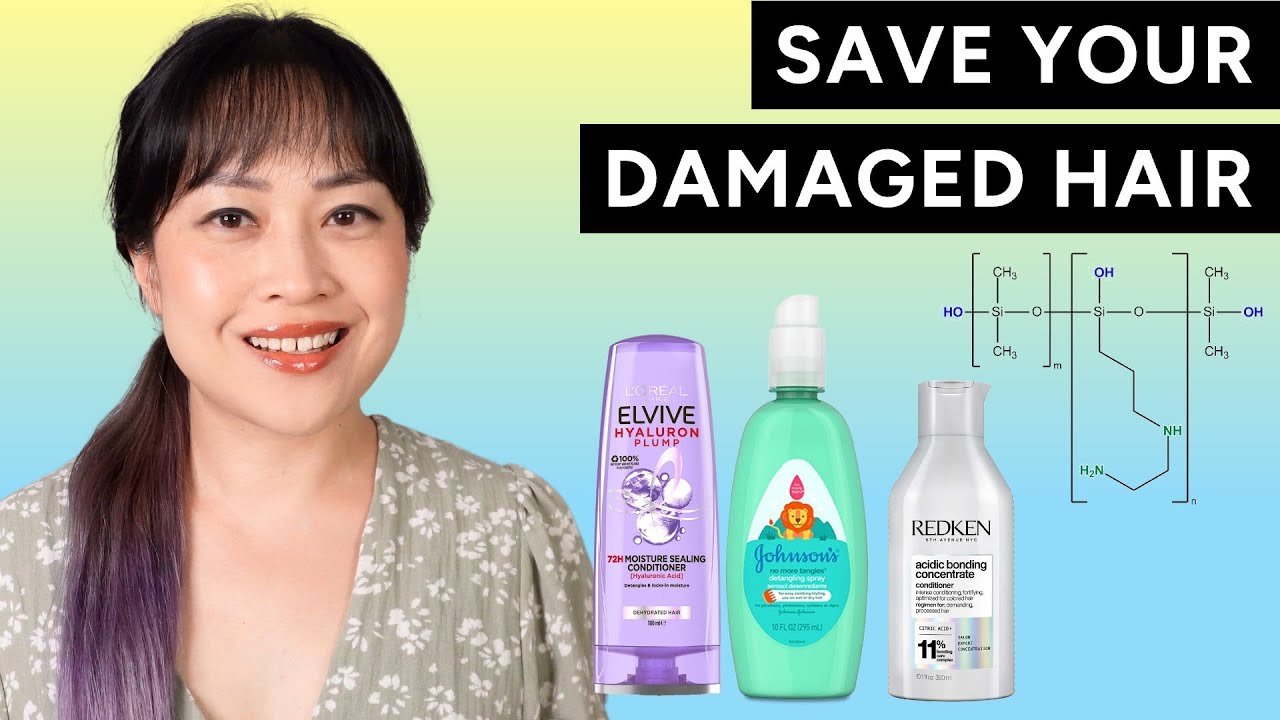
Join us for a concise explanation of why amodimicone revived hair health and how this silicone functions at a molecular level. The Lab Muffin Beauty Science video, led by Michelle—a chemistry PhD and cosmetic chemist—outlines what amodimethicone is and how it differs from other silicones.
Expect clear guidance on choosing wash-off versus leave-on conditioners, when silicone-free alternatives are preferable, and curated product recommendations. Count on us to distill the science, debunk common myths, and equip readers to make smarter haircare decisions.
This ingredient saved my hair — personal testimonial
Initial hair issues: dryness, breakage, frizz and product failure
We began with hair that suffered from chronic dryness, frequent breakage, and persistent frizz despite using multiple moisturizers and heat-protection routines. Our haircare rotations included hydrating shampoos, protein treatments, and various styling serums, yet we still experienced brittle ends and styles that did not hold between washes. Many products felt like temporary fixes: they improved shine or softness for a few hours but left the hair lank, tangled, or prone to static by the next day.
How I discovered amodimethicone (reference to Lab Muffin Beauty Science video)
We discovered amodimethicone while researching ingredients more systematically and watching an explanatory video by Lab Muffin Beauty Science that highlighted its mechanism and practical benefits. The scientific approach in that resource helped us understand why some silicones perform differently and guided our experiment with products containing amodimethicone. Armed with that overview, we selected a few rinse-off conditioners and a lightweight leave-in serum that listed amodimethicone in the formula and began a controlled trial.
Immediate improvements noticed after first uses
After the first few uses, we noticed immediate and tangible benefits. Wet combing was noticeably easier, with fewer snags and less tension on the strands; tangles slid apart with minimal pulling. Drying time shortened slightly, and hair felt smoother to the touch once it was dry. Frizz was subdued in humid conditions and styles looked glossier without an oily residue. These rapid improvements were consistent across both rinse-out and leave-on formats when used in appropriate amounts.
Long-term changes in texture, manageability and retention of styles
Over several weeks of continued use, our hair texture improved in a way that suggested fewer mechanical microtears and better cuticle alignment. Breakage during brushing diminished, split ends seemed less frequent, and curls and waves retained definition for longer between washes. Styles — whether air-dried or heat-styled — held shape better and required less product layering to achieve the same effect. The cumulative result felt like restored manageability rather than simply cosmetically masking problems.
Emotional and practical impact: confidence, fewer salon visits, cost savings
The combination of immediate cosmetic benefits and longer-term improvements led to measurable emotional and practical advantages. We felt more confident in everyday styling, which reduced the impulse to book frequent corrective salon appointments. Fewer targeted treatments and mid-cycle trims were needed, and overall product consumption stabilized because a single well-formulated conditioner or serum performed multiple roles. This translated to time savings, fewer salon bills, and more efficient use of our haircare budget.
What is amodimethicone?
Chemical class: modified silicone polymer (organosiloxane) with amine functionality
We view amodimethicone as a modified silicone polymer—an organosiloxane backbone that has been functionalized with amine groups. These amine functionalities are the defining feature that differentiates amodimethicone from neutral silicones and confer cationic character under typical cosmetic pH conditions. The modification allows the polymer to interact differently with hair fibers compared with non-functionalized silicones.
Basic molecular features that matter for hair: non-volatile backbone plus cationic groups
The molecular features that matter for hair are twofold: a non-volatile silicone backbone provides flexible, durable film-forming properties, while the cationic amine groups are capable of carrying a positive charge at slightly acidic pH. Hair strands are mildly negatively charged, especially where the cuticle is damaged or when treated chemically, so the positively charged moieties promote selective attraction and deposition onto those sites.
Physical properties: water-dispersible behaviour and film-forming capacity
Physically, amodimethicone is typically formulated as a water-dispersible component rather than a freely water-soluble compound. It can be presented in emulsions or as part of copolymers that allow it to be incorporated into rinse-off and leave-on products. Once deposited on the hair, it forms a thin, flexible film that smooths the cuticle and reduces friction without necessarily creating a heavy, greasy coating when used appropriately.
Typical INCI names and synonyms to watch for on labels
When we read ingredient lists, we watch for INCI names such as “Amodimethicone” and for blend names like “Amodimethicone/Dimethicone Copolyol” or formulations indicating amine-functional silicones. Other descriptors may include references to “amine-functional silicone” or combinations with dimethicone. Because manufacturers sometimes present variations or copolymers, looking for the root “amodi-” or explicit naming is the most reliable approach.
How amodimethicone works on hair
Selective deposition onto damaged and negatively charged sites
Amodimethicone’s cationic character leads to selective deposition: the positively charged groups are attracted to negatively charged regions of the hair fiber, which are more prevalent where the cuticle is lifted, fractured, or chemically altered. This selectivity means the polymer tends to accumulate where it is most needed, rather than uniformly coating the entire hair shaft.
Film formation that smooths cuticle edges and reduces friction
Once deposited, the silicone backbone forms a thin film over the cuticle platelets and any microscopic irregularities. This smoothing reduces mechanical friction between strands and against combs or styling tools, which in turn decreases breakage from abrasion and mitigates frizz caused by misaligned cuticles scattering light.
Moisture management: reducing TEWL (transepidermal water loss) and keeping hair soft
The film formed by amodimethicone acts as a partial barrier to moisture loss, helping to lower transepidermal water loss (TEWL) from the cortex. While it does not fundamentally alter the internal chemistry of the fiber, by slowing water evaporation the polymer helps maintain softness and elasticity, reducing brittleness that can lead to breakage.
Tangle reduction, increased shine and perceived repair without altering hair chemistry
The combined effects—targeted deposition, cuticle smoothing, friction reduction, and moisture management—explain why amodimethicone produces rapid reductions in tangling, tangible increases in shine, and a strong perception of repaired hair. Importantly, these outcomes are cosmetic and mechanical rather than chemical repairs: the polymer improves the hair’s surface function and appearance without changing its underlying protein structure.
How amodimethicone differs from other silicones
Cationic behaviour versus neutral silicones (dimethicone, cyclomethicone)
Amodimethicone’s cationic behaviour sets it apart from neutral silicones such as dimethicone and cyclomethicone. Neutral silicones rely on physical spreading and hydrophobicity to provide smoothness, whereas amodimethicone leverages electrostatic attraction to bind preferentially to negatively charged, damaged sites. This leads to more targeted effects and often improved longevity of benefits in problem areas.
Water-dispersible or rinse-off friendly nature compared with non-water-soluble silicones
Many formulations of amodimethicone are designed to be water-dispersible, which makes them more compatible with rinse-off conditioners and easier to remove than some heavy, non-water-soluble silicones. By contrast, certain dimethicones are essentially non-water-soluble and can remain on the hair until removed by stronger surfactants or clarifying shampoos.
Preferential binding to damaged/negatively charged hair rather than indiscriminate coating
Because of its charge-driven deposition, amodimethicone tends not to coat every strand indiscriminately; instead it accumulates where the negative charge and damage are greatest. This targeted mechanism reduces the risk of uniformly weighing down healthy sections of hair and provides more efficient use of deposited material where it is most beneficial.
Lower perceived buildup risk in many formulations because deposition is targeted and easier to remove
In many practical formulations, the targeted deposition and water-dispersible nature of amodimethicone result in a lower perceived risk of buildup compared with heavier non-water-soluble silicones. When buildup does occur, it is often more localized and can be managed with routine clarifying or sulfated shampoos without aggressive stripping of moisture.
Types of silicone ingredients and where amodimethicone fits
Volatile silicones (e.g., cyclomethicone) and their quick-evaporating role
Volatile silicones, such as cyclomethicone, evaporate after application and are primarily used to reduce greasy feel, improve spreadability, and deliver non-greasy slip. They do not leave lasting films and are useful as carriers or feel modifiers in lightweight products.
Non-volatile silicones (e.g., dimethicone) and heavy coating potential
Non-volatile silicones like dimethicone remain on hair after application and form a durable hydrophobic film. They are effective at smoothing and shine but can feel heavier and are more likely to accumulate if used frequently without appropriate formulation considerations or clarifying steps.
Cationic silicones like amodimethicone and their unique affinity for hair
Cationic silicones such as amodimethicone combine film-forming properties with positive charge, producing selective binding to damaged or negatively charged hair regions. They occupy a middle ground in performance: durable yet targeted, with a reduced likelihood of indiscriminate heavy coating when formulated correctly.
Water-soluble or amphiphilic silicones and newer alternatives used in modern formulations
There are also water-soluble or amphiphilic silicones (for example, PEG-modified dimethicones and certain siloxane copolymers) that aim to offer the smoothing benefits of silicones while remaining easier to rinse. These newer alternatives can provide compromise solutions for consumers seeking silicone-like performance with simplified removal or reduced environmental persistence.
Wash-off conditioners versus leave-on products — role of amodimethicone
How amodimethicone is formulated into rinse-out conditioners for targeted smoothing
In rinse-out conditioners, amodimethicone is frequently incorporated as a dispersed phase or copolymer that deposits during the brief interval between application and rinsing. The cationic groups promote rapid binding to damaged hair, so even a short contact time yields smoothing and detangling benefits. This makes it especially valuable in products designed to be worked through the mid-lengths and ends and then rinsed.
Leave-on products: serums, creams and sprays containing amodimethicone and their benefits
Leave-on serums, creams, and sprays that include amodimethicone can extend the benefits of targeted smoothing over longer periods, improving manageability and heat-protection performance during styling. Because deposition is selective, low-to-moderate concentrations in leave-ons can provide sustained frizz control, enhanced shine, and easier detangling without necessarily overwhelming fine hair when used judiciously.
Strategies to balance efficacy and buildup risk between rinse-off and leave-on use
We recommend balancing efficacy and buildup risk by selecting the appropriate format for our hair type and usage pattern. For higher-porosity or chemically treated hair that benefits from more frequent smoothing, a rinse-off conditioner with amodimethicone can give needed conditioning without constant daily deposition. For styling longevity, a low-dose leave-on can be effective; alternating between formats, using smaller amounts, and applying primarily to mid-lengths and ends reduces cumulative deposition.
When to choose wash-off over leave-on depending on hair porosity and lifestyle
If our hair is highly porous, chemically processed, or frequently heat-styled, a rinse-off concentrate can deliver robust smoothing and detangling during regular washing cycles, while minimizing continuous surface accumulation. For those with lower porosity or fine hair who need occasional smoothing without added weight, minimal leave-on use or targeted mid-length application may be preferable. Lifestyle factors — such as frequency of washing, exposure to humidity, and time available for styling — also inform whether wash-off or leave-on products are more practical.
Benefits for different hair types and concerns
Dry, chemically or heat-damaged hair: filling gaps and smoothing cuticles
For dry or damaged hair, amodimethicone provides real benefits by filling microscopic gaps, laying down a protective film, and smoothing raised cuticles. These effects reduce water loss and mechanical damage during combing and styling, making hair feel less brittle and more resilient between professional treatments.
Curly and coily hair: definition, frizz control and reduced breakage from friction
Curly and coily textures particularly benefit from the friction-reducing and cuticle-smoothing properties of amodimethicone. Improved strand slip reduces inter-fiber abrasion during detangling and styling, enhancing curl definition, controlling frizz in humid conditions, and lowering breakage caused by combing and manipulation.
Fine hair: choosing concentrations and formulations to avoid weighing hair down
Fine hair is more sensitive to weight, so we advise selecting formulations with lower concentrations of amodimethicone, lighter carrier silicones, or products that are clearly marketed as volumizing or weightless. Placing product mainly on mid-lengths and ends rather than at the roots and using small amounts preserves body while still delivering smoothing benefits.
Color-treated hair and chemically processed hair: compatibility and protection
Amodimethicone is compatible with most color- and chemically treated hair because it does not chemically interact with dyes or relaxers; instead it deposits on damaged sites to provide a protective, smoothing layer. This can help color-treated hair retain vibrancy longer by reducing surface roughness that scatters light and accelerating color fade.
Common myths and misconceptions about amodimethicone and silicones
Myth: ‘Silicones suffocate hair or prevent moisture’ — why that’s inaccurate
We routinely encounter the notion that silicones suffocate hair or prevent moisture from entering. This is inaccurate: hair is not a living tissue that “breathes,” and silicones form thin films that can reduce excessive water loss while still allowing some moisture exchange. Properly formulated products balance occlusion and permeability; silicones do not block essential metabolic processes in hair fibers because hair is non-living keratin.
Myth: ‘All silicones cause irreversible buildup’ — differences in chemistry and formulation matter
The blanket claim that all silicones cause irreversible buildup ignores important chemical distinctions. Some silicones are volatile or water-dispersible and do not persist on hair, while cationic silicones like amodimethicone are designed for targeted deposition and are often easier to manage. Buildup risk depends on molecular weight, solubility, concentration, and formulation, not simply the presence of a silicone.
Myth: ‘Silicones prevent hair repair or block actives’ — how targeted deposition actually helps
There is a misconception that silicones prevent hair repair by blocking active ingredients. In practice, the targeted deposition of cationic silicones often occurs at damaged areas and can actually improve the functional surface for subsequent conditioning or protein treatments by reducing friction and sealing microsites that would otherwise lead to further mechanical damage. When actives need to penetrate deeply, appropriate formulation timing and product layering strategies mitigate potential interaction issues.
Clarifying confusion between water-soluble silicones and non-water-soluble silicones
Confusion also arises between water-soluble or easily removable silicones and non-water-soluble types. We clarify that water-soluble or amphiphilic silicones are engineered for easier rinseability, while non-water-soluble silicones require stronger surfactants to remove. Recognizing the distinction helps consumers select products that match their tolerance for maintenance and clarifying frequency.
How to use amodimethicone-containing products effectively
Choosing the right product type for your hair (leave-on vs rinse-off) and goals
We recommend selecting product types based on hair needs and goals: use rinse-off conditioners with amodimethicone for concentrated smoothing during wash days, and reserve leave-on serums or sprays for styling, heat protection, and extended frizz control. For fine or low-porosity hair, prioritize lighter formulations or rinse-off use; for porous or chemically treated hair, heavier leave-ons can be beneficial.
Application technique: amount, placement (mid-lengths and ends), and distribution
Effective application focuses on technique: use small amounts, concentrate application on mid-lengths and ends where damage is greatest, and avoid the scalp to preserve volume at the roots. Even distribution can be aided by combing through while the product is in the hair or using fingers to smooth strands, but less is often more to prevent unnecessary buildup.
Frequency of use and when to clarify or reset with a clarifying shampoo
Frequency of use depends on hair type and product density. Many people will benefit from daily light leave-on use or routine rinse-off conditioner at each wash, while clarifying with a surfactant-containing shampoo every one to four weeks helps reset surfaces if hair starts to feel heavy or limp. We recommend monitoring the hair’s behavior and adjusting clarifying frequency rather than adhering to a rigid schedule.
Layering with moisturizers, protein treatments and heat protectants for best results
Amodimethicone works well as part of a balanced regimen: layer moisturizers and humectants to address internal hydration, use periodic protein treatments for structural reinforcement if needed, and include heat protectants when styling. Because amodimethicone reduces friction and improves surface smoothness, it complements these treatments by protecting the hair during mechanical and thermal stress.
Conclusion
Key takeaways about why amodimethicone can ‘save’ dry, damaged or frizzy hair
Our experience and the underlying science converge on a few key takeaways: amodimethicone offers targeted smoothing through cationic deposition, reduces friction and TEWL, improves manageability and shine, and can yield both immediate cosmetic and longer-term functional benefits for dry, damaged, or frizzy hair. It accomplishes these without chemically altering the hair’s protein matrix.
Practical recommendations: pick the right product type, monitor for buildup, clarify occasionally
Practically, we advise choosing the product type that matches our hair’s porosity and styling needs, applying conservatively with attention to placement, and monitoring the hair for any signs of buildup. When the hair feels weighed down, a clarifying wash restores balance. This pragmatic approach maximizes benefit while minimizing maintenance overhead.
Balance efficacy, safety and environmental concerns when choosing products
We also emphasize an informed balance between efficacy and broader considerations: evaluate product safety, biodegradability, and environmental impact along with performance. Some silicones have persistence concerns in aquatic environments, so we encourage consideration of product type, wash-off frequency, and available biodegradable alternatives when environmental impact is a priority.
Encouragement to experiment responsibly and consult evidence-based resources like Lab Muffin Beauty Science for deeper dives
Finally, we encourage responsible experimentation: trial products methodically, observe how our hair responds over several washes, and adjust accordingly. For deeper, evidence-based explanations of mechanisms and formulation choices, resources such as the scientific treatments produced by reputable science communicators can be invaluable for making smarter haircare decisions.