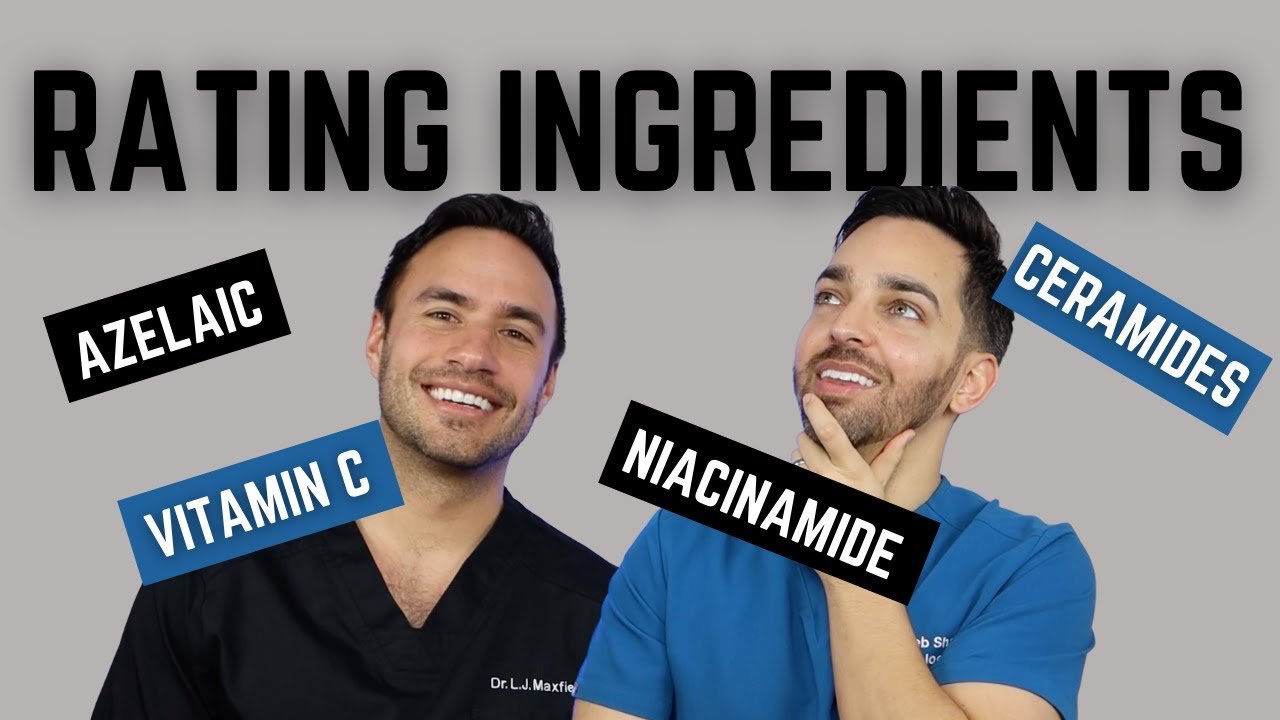
In “Overrated or Underrated Skincare Ingredients Explained,” let us outline a concise guide to assessing popular actives, including hyaluronic acid, niacinamide, honey, vitamin C, azelaic acid, and ceramides. The video by Doctorly presents informed opinions, recommended products, and segment timestamps to help viewers judge whether each ingredient merits its reputation.
Let us summarize the approach: each ingredient is evaluated for clinical effectiveness, typical marketing claims, practical usage tips, and product recommendations, focusing on whether it is overrated or underrated. Affiliate links are noted in the video to support the channel while encouraging informed, cost-conscious choices.
Hyaluronic Acid
We view hyaluronic acid (HA) as a highly useful humectant that delivers immediate hydration and improves skin feel, but we caution that its long-term anti‑aging billing often exceeds what the evidence supports.
Quick verdict: Often overrated for long-term anti-aging but underrated for immediate hydration
HA is frequently marketed as a volumizing, long-term filler alternative; in reality, it excels at transiently restoring stratum corneum water content and plumping surface dehydration, but it does not permanently reverse volume loss.
What it does: humectant that binds and holds water in the stratum corneum
HA attracts and retains water in the outer epidermis, improving softness, elasticity, and clinical measures of hydration by increasing water-binding capacity in the stratum corneum.
Evidence snapshot: strong hydrating data, limited direct collagen-boosting evidence
Clinical trials consistently show HA improves skin hydration and barrier function; however, robust direct evidence that topical HA reliably increases collagen synthesis or produces sustained volumetric change is limited.
Who benefits most: dehydrated skin, dry climates, post-procedure patients
We find HA especially helpful for people with dry or dehydrated skin, those in low‑humidity environments, and patients recovering from procedures who need immediate, soothing hydration.
Common misconceptions: replaces lost volume or permanently plumps skin — it does not
A common misunderstanding is that topical HA replaces subcutaneous volume or permanently plumps skin; topical forms improve surface hydration but do not substitute for injectable fillers.
Usage and formulation tips: look for different molecular weights, combine with occlusives
Formulations that include a mix of molecular weights can hydrate at multiple skin depths; pairing HA with occlusives (e.g., petrolatum, dimethicone) locks in moisture for longer effect.
Potential side effects and interactions: generally safe, beware of very dry environments without occlusion
Topical HA is well tolerated, but in very low‑humidity settings it can draw moisture from deeper layers and feel drying unless followed by an occlusive to seal hydration.
Practical recommendations: use in serums/moisturizers and layer under emollients for best results
We recommend HA serums or moisturizers applied to damp skin, then sealed with an emollient or cream to maximize hydration retention and clinical benefit.
Niacinamide
We consider niacinamide one of the most versatile, evidence‑backed, and user‑friendly actives for a broad range of skin concerns.
Quick verdict: Underrated — versatile, evidence-backed, and well-tolerated
Niacinamide is often underrated relative to trendier actives; it has consistent clinical data, low irritation risk, and multiple mechanisms beneficial across skin types.
What it does: strengthens barrier, regulates sebum, reduces erythema and hyperpigmentation
Niacinamide enhances ceramide synthesis and barrier function, helps regulate sebum production, reduces redness, and interferes with melanosome transfer to improve pigmentation.
Evidence snapshot: multiple clinical studies supporting barrier repair and pigmentation benefits
Numerous trials demonstrate improvements in transepidermal water loss, skin texture, sebum control, and reductions in hyperpigmentation with topical niacinamide.
Who benefits most: oily/combination skin, rosacea-prone, acne-prone, sensitive skin
We recommend niacinamide for oily or combination skin, individuals with rosacea or sensitive skin due to its anti‑inflammatory effects, and those with acne or pigment concerns.
Common misconceptions: must be avoided with vitamin C — most modern formulations are compatible
The old warning that niacinamide and vitamin C cannot be combined is largely overstated; modern formulations and pH‑adjusted products generally allow concomitant use without loss of efficacy.
Usage and concentration guidance: effective at 2–5% for many outcomes, up to 10% tolerated by many
We find 2–5% niacinamide effective for most endpoints; concentrations up to 10% are tolerated by many, though higher levels may increase irritation in sensitive individuals.
Formulation & compatibility: stable, mixes well with most actives except rare irritant pairings
Niacinamide is chemically stable and pairs well with retinoids, AHAs/BHAs, and antioxidants; avoid layering with known irritants if skin sensitivity is a concern.
Practical recommendations: incorporate into morning or evening routines; consider The Ordinary and similar products
We suggest introducing niacinamide early in your routine (after cleansing, before heavier oils/creams) and using it daily; accessible formulations from mainstream brands offer reliable options.
Honey (and Honey-derived Ingredients)
We see honey—and particularly standardized or medical-grade varieties—as a useful supportive ingredient for antimicrobial activity and wound healing, though its cosmetic miracle claims are exaggerated.
Quick verdict: Underrated as an antimicrobial and wound-healing adjunct, overrated as a miracle ingredient
Honey has meaningful antimicrobial and wound‑healing properties, especially medical‑grade Manuka honey, but it is not a cure‑all for acne or aging when used in typical cosmetic concentrations.
What it does: humectant, antimicrobial (especially medical-grade Manuka), soothing and film-forming
Honey functions as a humectant, provides mild antimicrobial activity, soothes irritation, and forms a protective film that aids barrier repair and wound healing.
Evidence snapshot: good in wound care and minor barrier repair; cosmetic evidence more limited
Clinical evidence supports honey in wound care and minor barrier restoration; data for cosmetic anti‑aging or dramatic acne resolution are less convincing at standard product levels.
Who benefits most: sensitive, barrier-compromised, acne-prone with secondary infection risks
We recommend honey-containing products for individuals with sensitive or compromised barriers, and for acne-prone skin at risk of secondary infection, when standardized honey is used.
Common misconceptions: raw honey in tonics cures acne or radically reverses aging
Raw honey applied as a tonic is often overstated in marketing; it may hydrate and soothe but should not be expected to cure acne or reverse significant photoaging.
Usage and formulation tips: look for standardized or medical-grade honey in leave-on products
When choosing honey products, prioritize standardized or medical‑grade formulations in leave‑on cleansers, masks, or moisturizers rather than raw kitchen honey.
Allergy and safety considerations: avoid if allergic to bee products; patch test
We advise patch testing and avoiding honey products if allergic to bee products, as contact reactions can occur despite general tolerability.
Practical recommendations: useful in cleansers, masks, and certain moisturizers as a supportive ingredient
We recommend honey as a supportive ingredient within cleansers, hydrating masks, and moisturizers, complementing barrier repair rather than acting as a primary active for aging.
Vitamin C (Ascorbic Acid and Derivatives)
We regard topical vitamin C as an important, evidence‑based tool for photoprotection and pigmentation, but it requires correct formulation and realistic expectations.
Quick verdict: Potentially overrated because expectations exceed realistic outcomes, but underrated for photoprotection and pigmentation when used correctly
Vitamin C is often hyped as a panacea; nonetheless, when stable and used properly it provides meaningful antioxidant protection and reduces hyperpigmentation.
What it does: antioxidant, supports collagen synthesis, reduces hyperpigmentation and photodamage
Topical vitamin C neutralizes free radicals, supports collagen production, and interferes with melanogenesis to improve photodamage and pigmentation.
Evidence snapshot: strong for topical photoprotection adjunct, pigmentation improvement; stability is key
Clinical studies show vitamin C reduces UV‑induced oxidative stress and improves melanin-driven spots; however, benefits depend heavily on formulation stability and concentration.
Who benefits most: photo‑aged skin, hyperpigmentation-prone patients, anyone seeking antioxidant support
We recommend vitamin C for those with sun‑damaged skin, melasma or PIH, and anyone wanting daytime antioxidant support beneath sunscreen.
Common misconceptions: all vitamin C forms are equal — stability, pH, and derivative matter
Not all vitamin C forms perform equally; L‑ascorbic acid is potent but unstable and pH‑sensitive, while derivatives differ in skin penetration and efficacy.
Formulation and types: L-ascorbic acid (potent, unstable, low pH), MAP, SAP, tetrahexyldecyl ascorbate (more stable derivatives)
We prefer choosing formulations based on intended use: L‑ascorbic acid for potent antioxidant action at low pH, or stable derivatives (e.g., MAP, SAP, lipid‑soluble esters) for tolerability and shelf stability.
Usage and concentration advice: 10–20% L-ascorbic acid effective; lower concentrations of stable derivatives can work
For L‑ascorbic acid, 10–20% at appropriate pH delivers meaningful results; derivatives may be effective at lower concentrations depending on formulation and delivery.
Layering and interactions: pairs well with vitamin E and ferulic acid for stability and efficacy; avoid irritating it with strong AHA/BHA at same time
Vitamin C synergizes with vitamin E and ferulic acid to enhance photoprotection and stability; avoid simultaneous application with strong acids that may increase irritation unless skin is tolerant.
Practical recommendations: choose stable formulations, store away from light/heat, incorporate into morning routine under sunscreen
We advise selecting well‑formulated products, keeping them cool and dark, applying vitamin C in the morning, and following with broad‑spectrum sunscreen for optimal benefit.

Azelaic Acid
We consider azelaic acid an underutilized, well‑tolerated treatment for acne, rosacea, and pigmentation with strong clinical support.
Quick verdict: Underrated — effective for acne, rosacea, and pigmentation with good tolerability
Azelaic acid is often overlooked despite robust efficacy across inflammatory and pigmentary disorders and a favorable tolerability profile.
What it does: anti-inflammatory, comedolytic, tyrosinase inhibitor (reduces hyperpigmentation)
Azelaic acid reduces inflammation, helps normalize follicular keratinization to prevent comedones, and inhibits tyrosinase to lighten hyperpigmented lesions.
Evidence snapshot: clinical data supports use for rosacea, mild-moderate acne, and post-inflammatory hyperpigmentation
Randomized trials demonstrate azelaic acid’s effectiveness in rosacea, acne, and PIH, and it is a reliable alternative to more irritating therapies for sensitive patients.
Who benefits most: sensitive/acne-prone skin, rosacea sufferers, those with PIH
We recommend azelaic acid for patients with acne who cannot tolerate harsher agents, for rosacea with inflammatory papules, and for treating residual hyperpigmentation.
Common misconceptions: only for acne — it also treats pigmentation and inflammation
Azelaic acid is frequently pigeonholed as an acne medication, but it has dual benefits for pigmentation and inflammatory dermatoses such as rosacea.
Usage and concentration guidance: typically used at 10% (OTC) or 15–20% (prescription formulations)
Over‑the‑counter products commonly contain about 10% azelaic acid; prescription options range 15–20% and may offer greater efficacy with similar tolerability.
Side effects and tolerability: mild irritation possible, generally well-tolerated even in sensitive skin
Irritation or burning can occur, particularly initially, but azelaic acid is generally well tolerated and suitable for many sensitive skin types.
Practical recommendations: consider as an alternative to topical retinoids or benzoyl peroxide for sensitive patients
We suggest azelaic acid as a first‑line topical for those who cannot tolerate retinoids or benzoyl peroxide, or as adjunctive therapy for pigmentation and inflammation.
Ceramides
We emphasize ceramides as foundational ingredients for barrier repair whose importance is frequently underestimated relative to flashier actives.
Quick verdict: Underrated — essential for barrier repair and maintenance, often underappreciated relative to trendier actives
Ceramides are critical structural lipids that restore barrier integrity and reduce TEWL; they deserve priority in routine care, especially for compromised skin.
What it does: lipid components that restore and maintain the skin barrier and reduce TEWL
Topical ceramides replenish key epidermal lipids, reconstituting lamellar structure, improving hydration, and decreasing transepidermal water loss.
Evidence snapshot: robust support for barrier improvement, reduced sensitivity, and improving dry/eczematous skin
Multiple studies support ceramide‑containing regimens in improving barrier function, reducing dryness and sensitivity, and aiding atopic dermatitis management.
Who benefits most: dry skin, eczema/atopic dermatitis, barrier-compromised post-procedure skin
We recommend ceramide‑rich products for dry or atopic skin, post‑procedure care, and anyone with chronic barrier dysfunction.
Common misconceptions: ceramide-containing products are instant cures for severe dermatologic disease — they help but aren’t standalone treatments for some conditions
Ceramides aid barrier repair but are not a standalone cure for severe dermatoses; they are often an essential adjunct to prescribed medical therapy.
Formulation considerations: look for ceramide complex or multiple ceramide types plus cholesterol and fatty acids in correct ratios
Effective barrier repair formulas include multiple ceramide species paired with cholesterol and free fatty acids in physiologic ratios to optimally restore lipid architecture.
Usage and pairing: best paired with occlusives and humectants for comprehensive barrier repair
For maximal barrier restoration, use ceramides alongside humectants (e.g., glycerin) and occlusives to hydrate and seal the stratum corneum.
Practical recommendations: include a ceramide-rich moisturizer like CeraVe in daily routine, especially after active treatments
We advise incorporating a ceramide‑rich moisturizer into daily care—particularly post‑procedure or after exfoliation—to support healing and maintain barrier integrity.
Retinoids (Retinol, Retinaldehyde, Tretinoin)
We view retinoids as among the most effective long‑term anti‑aging and acne treatments, but they require careful use and patient education to avoid overuse and intolerance.
Quick verdict: Underrated in terms of long-term efficacy, sometimes overrated for immediate results and misused without tolerance-building
Retinoids deliver strong, evidence‑based benefits over time; however, unrealistic expectations for rapid change and aggressive escalation often lead to unnecessary irritation.
What it does: increases cell turnover, boosts collagen, reduces fine lines, and treats acne
Retinoids normalize keratinocyte differentiation, increase epidermal turnover, stimulate dermal collagen production, and reduce comedones and inflammatory acne lesions.
Evidence snapshot: strong for anti-aging and acne; prescription retinoids show highest efficacy
Extensive clinical evidence supports retinoids for wrinkle reduction, texture improvement, and acne control, with prescription retinoids generally producing the largest effects.
Who benefits most: aging skin, acne-prone adults, uneven texture and hyperpigmentation
We recommend retinoids for adults addressing photoaging, persistent acne, coarse texture, and postinflammatory hyperpigmentation when tolerated.
Common misconceptions: faster is better — higher strength leads to more irritation if not titrated
Many assume immediate escalation to high strength yields faster results; in practice, gradual titration minimizes irritation and improves long‑term adherence.
Usage and tolerance strategy: start low and slow, use moisturizers and sunscreen, introduce every few nights
We advise initiating retinoids at low concentration and frequency, combining with moisturizers, using sun protection daily, and increasing use as tolerance develops.
Side effects and contraindications: irritation, photosensitivity, contraindicated in pregnancy for retinoic acid
Common side effects include redness, peeling, and photosensitivity; topical retinoic acid derivatives are contraindicated in pregnancy and should be avoided by those trying to conceive.
Practical recommendations: use at night, pair with barrier-supporting products, consider retinal or bakuchiol for sensitive users
We recommend evening application, coupling retinoids with ceramide/humectant moisturizers, and considering gentler alternatives (retinaldehyde, bakuchiol) for those who cannot tolerate retinol.
Peptides
We regard peptides as promising signaling ingredients with some clinical support, but they are often marketed beyond what individual formulations can deliver.
Quick verdict: Mixed — promising and supported in some contexts, but often overrated by marketing with inconsistent evidence across formulations
Certain peptides show measurable effects on firmness and wrinkle appearance, yet many marketed peptide products lack adequate formulation or concentration for meaningful impact.
What it does: signalling molecules that may stimulate collagen production or modulate inflammation depending on peptide type
Specific peptides can act as extracellular matrix modulators, collagen stimulators, or anti‑inflammatory signals, but mechanisms and potency vary widely among peptide classes.
Evidence snapshot: some clinical studies show improvements in firmness and wrinkles for specific peptides; formulation stability matters
Targeted peptide complexes have produced modest clinical improvements in some trials, but consistent results depend on peptide identity, concentration, and delivery system.
Who benefits most: aging skin seeking non-retinoid collagen support or those who cannot tolerate retinoids
Peptides are best positioned as adjuncts for aging skin, particularly for individuals who want collagen‑supporting alternatives or cannot tolerate retinoids.
Common misconceptions: all peptides are the same and will produce dramatic collagen remodeling
A common error is assuming all peptides perform identically; in reality, peptide activity is highly specific and rarely produces dramatic remodeling alone.
Formulation and delivery: peptides require proper concentrations and delivery systems to penetrate effectively
Effective peptide products need validated concentrations and formulation strategies that protect stability and enhance epidermal delivery.
Usage and expectations: expect subtle improvements over months, often as supportive therapy
We set realistic expectations: peptides typically yield gradual, modest changes over months and work best as part of a multi‑modal anti‑aging regimen.
Practical recommendations: use peptides as part of a layered anti-aging approach, not as the sole active
We suggest integrating peptides alongside sunscreen, retinoids, and barrier repair agents, viewing them as supportive rather than primary therapies.
AHAs and BHAs (Glycolic Acid, Lactic Acid, Salicylic Acid)
We consider chemical exfoliants essential clinical tools for texture, pigmentation, and acne when used appropriately and safely.
Quick verdict: Not overrated — very useful exfoliants, though benefits are sometimes exaggerated when not used correctly
AHAs and BHAs offer proven resurfacing, acne, and pigmentation benefits; misuse—overuse or inappropriate combinations—can damage the barrier and counteract results.
What they do: promote exfoliation, improve texture, treat acne (BHA), and help with pigmentation and dullness (AHAs)
AHAs accelerate corneocyte desquamation to improve texture and pigmentation, while BHA (salicylic acid) penetrates follicles to reduce comedones and inflammation.
Evidence snapshot: strong data for acne (salicylic acid) and resurfacing/pigmentation (AHAs) when used at effective concentrations
Clinical studies support salicylic acid for acne reduction and AHAs for photodamage and uneven texture; efficacy correlates with concentration, pH, and exposure time.
Who benefits most: congested skin, dull texture, pigmentation concerns, oily/acne-prone individuals
We recommend chemical exfoliants for those with clogged pores, rough texture, postinflammatory pigmentation, or oily, acne‑prone skin.
Common misconceptions: daily high-concentration use is better — over-exfoliation causes barrier damage
Frequent high‑strength use often leads to irritation and barrier compromise; measured, spaced use provides benefits without long‑term harm.
Usage and safety: follow pH/concentration guidance, use sunscreen rigorously, avoid mixing multiple strong exfoliants concurrently
We emphasize adherence to recommended concentrations and product pH, strict sunscreen use due to increased photosensitivity, and avoiding simultaneous application of multiple strong acids.
Formulation and application tips: consider leave-on vs rinse-off, start with lower concentrations and increase gradually
Choose leave‑on products for ongoing maintenance and periodic professional peels for deeper resurfacing; begin with lower concentrations and build tolerance.
Practical recommendations: use BHA for blackheads/acne, AHAs for texture and discoloration; alternate with gentle hydrating days
We typically assign salicylic acid for follicular acne and glycolic/lactic acids for pigmentation and textural concerns, cycling with hydrating, barrier‑supporting days.
Conclusion
We summarize the relative value of ingredients and offer practical guidance to prioritize evidence and barrier health over trends.
Summary of overrated vs underrated: trend-driven hype often elevates unstable or marginally effective ingredients while essential barrier and photoprotective ingredients are undervalued
Many trending actives receive disproportionate attention despite limited evidence, while staple interventions—sunscreen, ceramides, and stable antioxidants—often provide more predictable, meaningful benefit.
Key principles to prioritize: sunscreen, barrier repair (ceramides, humectants, occlusives), and evidence-backed actives appropriate for your skin goals
We recommend prioritizing daily broad‑spectrum sunscreen, consistent barrier repair with ceramides/humectants/occlusives, and adding targeted actives based on clear clinical evidence and individual goals.
How to choose ingredients: assess evidence, skin type, goals, formulation quality, and tolerance rather than marketing claims
When selecting products, we focus on peer‑reviewed evidence, compatibility with skin type, formulation stability, and the individual’s tolerance instead of relying on marketing narratives.
Practical routine-building tips: start simple, introduce one active at a time, patch test, and focus on consistency
We advise building routines gradually—introduce a single active at a time, perform patch testing, allow several weeks to assess response, and emphasize consistent use over frantic product rotation.
When to consult a professional: persistent acne, rosacea, severe eczema, or if you plan to use prescription-strength actives
Seek dermatologic or medical consultation for refractory acne, rosacea, severe eczema, or before initiating prescription retinoids, high‑strength acids, or other potent therapies.
Final takeaway: balance realistic expectations with clinical evidence — some ‘trendy’ ingredients have real uses, but fundamentals (sun protection and barrier health) deliver the most reliable results
Our central message is to temper hype with evidence: many trendy actives can be useful, yet fundamentals—sunscreen, barrier repair, and appropriately chosen, well‑formulated actives—provide the best foundation for sustained skin health.